Wireless charging has grown from a slow, secondary feature into one of the most common charging standards for iPhone, Samsung, and Pixel devices. But in 2025, the real debate isn’t wireless vs wired anymore, it’s magnetic chargers versus regular wireless chargers. Both use Qi technology, but they work very differently in alignment, stability, speed, and everyday convenience. If you’re planning to upgrade your setup, here’s the simplified comparison you need.
What Is a Regular Wireless Charger?
A regular wireless charger is a simple flat pad or stand that charges your phone when you place it on top. It works with almost all Qi-enabled phones and is affordable and easy to use. However, it needs perfect placement. If the phone shifts even slightly during the night or from a notification vibration, charging can stop without you noticing. This makes regular chargers better suited for calm environments such as desks and nightstands, but not ideal for people who frequently pick up their phones.
What Is a Magnetic Phone Charger?
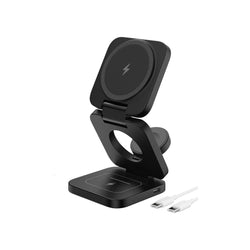
A magnetic charger takes wireless charging to the next level by snapping your phone into perfect alignment automatically. Magnets inside the charger and the device lock together instantly, creating a secure, stable charging connection. This auto-alignment ensures faster and more reliable speed, better thermal control, and consistent power. Magnetic chargers are slightly more expensive, but they make daily charging dramatically easier, especially while gaming, scrolling, or using the phone on the go.
Charging Speed Comparison (2025)
Regular wireless chargers usually deliver about 5W to 10W of power, but their performance drops if the phone is even slightly misaligned or gets too warm. Magnetic chargers, especially modern Qi2-ready models, provide stable 15W fast charging with far less energy loss. Because the alignment is always perfect, magnetic chargers maintain speed longer and stay more consistent during everyday use.
Ease of Use & Daily Convenience
Regular wireless chargers require careful placement and often stop charging when the phone moves. Many users wake up to find their phone barely charged because it shifted overnight. Magnetic chargers eliminate this problem. The phone snaps into place automatically, charges instantly, and can be picked up or placed back on the charger with one hand. There is no slipping, adjusting, or guessing whether it’s charging properly.
Stability & Grip
Regular chargers only hold the phone by surface contact, so even small movements can interrupt charging. Magnetic chargers, on the other hand, lock into place using strong magnets like N52 and N55. The phone stays secure even if your table shakes, notifications vibrate, or you actively use the device while charging.
Compatibility Differences
Regular wireless chargers work with all Qi-enabled phones with no case restrictions. Magnetic chargers work best with MagSafe or magnetic-compatible phones and cases. Older devices may need a magnetic ring attachment to get the full experience.
Safety & Heat Management
Alignment plays a huge role in heat buildup. Regular wireless chargers often generate extra heat when the coils don’t match perfectly, which slows charging. Magnetic chargers reduce heat naturally by staying aligned at all times. Modern magnetic chargers also come with temperature sensors, overcharge protection, and surge protection, making them safer for long-term battery health.
Portability & Travel Convenience
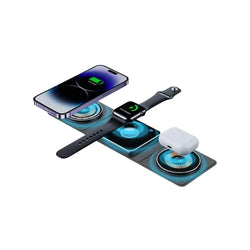
Regular wireless pads are easy to carry, but they’re not ideal for travel or car use. Magnetic chargers are far more travel-friendly because they are slim, compact, and snap onto the phone securely, even while moving. Many 2025 models include foldable 3-in-1 chargers for phones, watches, and earbuds, making them perfect for travel setups.
Use Case Comparison
For nightstands, regular wireless chargers still perform well since the phone stays in one place while you sleep. In cars, magnetic chargers are the clear winner due to their strong grip and effortless one-hand mounting. Gamers also prefer magnetic chargers because the phone remains aligned even in landscape mode. In offices, both types work fine depending on personal preference, but for travel, magnetic chargers easily take the lead because of their compact, foldable design.
Price Comparison
Regular wireless chargers are the most budget-friendly, with basic models starting at $10–$20 and premium versions reaching $30–$40. Magnetic chargers start around $20–$35, while premium Qi2-certified options range between $50–$90. High-end 3-in-1 foldable magnetic chargers can cost $60–$120. Although regular chargers win on price alone, magnetic chargers provide far better performance, stability, and long-term value.
Final Verdict
If you’re using a modern iPhone, Samsung, or Pixel device, magnetic chargers outperform regular wireless chargers in almost every important area speed, alignment, safety, stability, and convenience. Regular chargers are still fine for nightstands or users on a tight budget, but for most people in 2025, magnetic chargers simply offer a better, smoother, and more future-ready charging experience. As Qi2 becomes the new global standard, magnetic charging is quickly becoming the next evolution of wireless power.